How to Start Your Own Argan Oil Brand: A Step-by-Step Private Label Guide
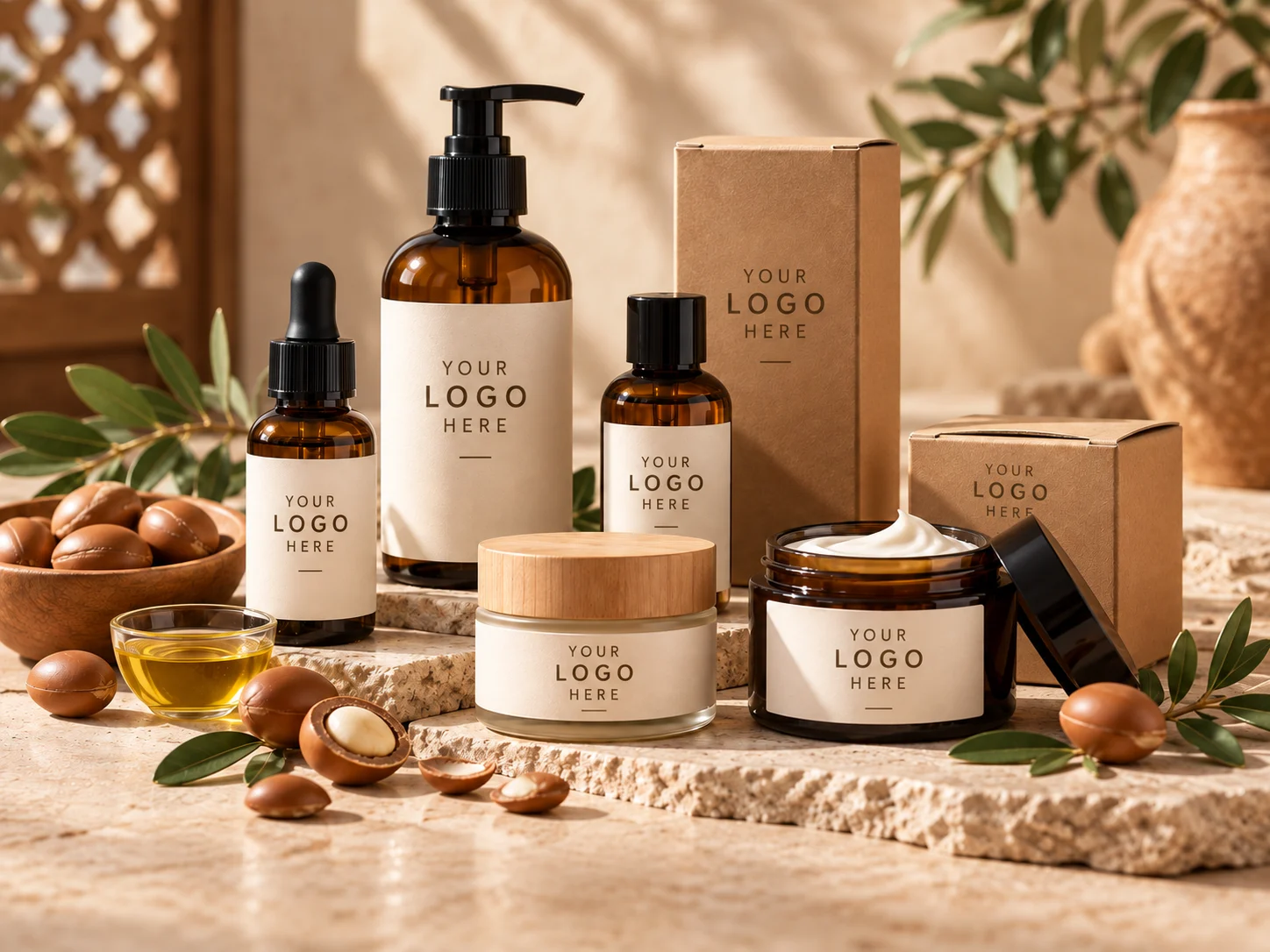
Argan oil is one of the few beauty ingredients that customers already know by name. That is good news if you want to launch a brand: you don't need to explain what it is. The bad news is that the shelves are crowded, and many first-time brands make the same expensive mistakes.
Private label solves the hardest part - production - without a factory. A producer fills, labels and packs the oil under your brand, and you focus on customers. This guide walks through every step, in the order we see successful clients follow it, from the first idea to the first shipment arriving at your warehouse.
Before You Start: Is Argan Oil the Right First Product?
It usually is, for three reasons. Customers recognize it, so marketing starts from trust rather than education. A single-ingredient product is simple to document and register. And one product can be positioned in several ways - face, hair, beard, body - so you can test markets without changing suppliers.
The trade-off is competition. You will not win on "100% pure argan oil" alone, because everyone says that. You win on a clear niche, a product that is genuinely good, honest claims and a brand story customers believe.
1. Choose Your Niche and Customer
Decide who you are selling to before you choose a bottle. The niche decides your packaging, your price, your claims and where you advertise.
| Niche | Typical customer | What they care about |
|---|---|---|
| Pure face oil | Women 30+, clean-beauty buyers | Purity, organic certification, elegant dropper bottle |
| Hair oil | Frizzy, curly or color-treated hair | Shine, frizz control, easy pump or dropper |
| Beard oil | Men 20-45 | Scent options, masculine design, gift sets |
| Spa and hammam line | Spas, salons, wellness centers | Larger formats, professional pricing, ritual kits |
| Premium duo | Luxury and gift market | Argan + prickly pear seed oil, rigid box |
Pick one. Brands that try to serve all five with the first order usually end up with stock that doesn't sell.
2. Decide What to Sell First
Start with one to three products. A good first range is a pure argan oil in two sizes (for example 30 ml and 100 ml) plus one complementary product: a hair oil blend, black soap or a small hammam kit.
Why so few? Every extra product multiplies your costs: minimum order quantities, label designs, registration fees and photos. Launch small, learn which product customers reorder, then expand with real sales data.
3. Choose a Reliable Supplier
This is the decision that most affects everything else. A good supplier:
- Produces in Morocco and can show you the facility, on a visit or a live video call.
- Sends a batch COA (Certificate of Analysis) and an MSDS for each order.
- Holds the certifications you want to claim, with certificate numbers you can verify.
- Offers samples before you commit.
- Answers clearly about MOQ, lead time and payment terms.
Red flags: prices far below the market, no documents, refusal to send samples, or "FDA approved" claims. We cover all of this in detail in our guide on how to choose an argan oil supplier.
4. Order and Test Samples
Order samples from two or three suppliers, and ask for the COA of the same batch as each sample. Then compare them properly:
- Blind test: pour each oil into identical unlabeled bottles, so the packaging doesn't influence you.
- Smell: cosmetic argan oil has a light, nutty scent. A strong toasted smell means culinary oil.
- Texture: it should absorb within a few minutes without leaving a heavy film.
- Lab test: if you plan a large order, send your preferred sample to an independent lab for a fatty acid and sterol analysis.
Keep a sealed part of the sample you approve. When your production order arrives, you can compare it side by side. See our guide on how to spot fake argan oil for the full checklist.
5. Packaging and Label Design
Argan oil should be sold in dark glass - amber or frosted - because light degrades it. Clear bottles look nice on Instagram but shorten shelf life.
Choosing the closure
- Dropper: best for face oils and serums; feels premium.
- Pump: best for hair and body oils; less mess, faster to use.
- Spray: rare for pure oil, useful for light blends and mists.
What must be on the label
Requirements vary by market, but most labels need:
- Product name and function (for example "Face oil")
- Full INCI list (for pure argan oil: Argania Spinosa Kernel Oil)
- Net quantity (ml)
- Batch number
- Expiry date or period-after-opening symbol
- Name and address of the responsible company in your market
- Country of origin
- Precautions, if any
Leave enough space on the label for all of this before your designer starts. A common and costly mistake is approving a beautiful design that has no room for the INCI list and batch number.
6. Understand Regulations in Your Market
Selling under your own brand makes you the legally responsible brand owner. Your supplier gives you technical documents; you handle registration.
- European Union: appoint a Responsible Person based in the EU, prepare a Product Information File and a safety assessment signed by a qualified assessor, and notify the product on the CPNP portal before it goes on sale.
- United Kingdom: a similar system, with notification on the SCPN portal.
- United States: under MoCRA, cosmetic facilities must be registered with the FDA and products listed. Claims must stay cosmetic ("moisturizes", "adds shine"), never medical ("treats eczema").
- Other markets: check with your importer or a local regulatory consultant before printing labels.
Budget time for this: regulatory work often takes longer than production.
7. Calculate Your Costs and Price
Your cost per unit is much more than the oil. List every line:
| Cost | What it includes |
|---|---|
| Product | Oil, bottle, closure, filling |
| Branding | Label printing, box, design |
| Documents and compliance | Safety assessment, registration, Responsible Person fees |
| Logistics | Shipping, insurance, import duties, customs broker |
| Sales channel | Marketplace fees, payment fees, fulfillment |
| Marketing | Photos, samples for influencers, advertising |
Then set a retail price that leaves real room for marketing. Many first-time brands price only on product cost and discover that advertising eats the whole margin. Our wholesale price guide explains what drives the cost of the oil itself.
8. Launch and Market Your Brand
Your strongest selling point is authentic origin. Use it honestly:
- Show where it comes from: photos and short videos of the argan region, the pressing and the filling. Ask your supplier for real images you are allowed to use.
- Educate, don't exaggerate: explain what argan oil really does for skin and hair. Honest content builds trust and avoids regulatory problems.
- Start with one channel: your own website, Amazon or Etsy. Master one before adding the next.
- Work with micro-influencers whose audience matches your niche, rather than one expensive celebrity post.
- Ask for reviews early: the first 20 reviews matter more than the next 200.
Mistakes We See Most Often
- Too many products in the first order. Money gets stuck in stock that doesn't move.
- Copying the supplier's organic logo. You can only claim "organic" if your finished product meets the organic rules of your market.
- Medical claims. "Cures acne" or "stops hair loss" can get listings removed and create legal risk.
- Skipping samples to save a week. It's the most expensive week you will ever save.
- Designing the label before checking what must be on it.
- No reorder plan. Production takes weeks; order again before you run out, not after.
FAQ
How much money do I need to start?
It depends on quantities, packaging and target markets. Plan a budget for three things: the first production order, registration and safety assessment in your market, and marketing for the launch.
What is the minimum order for private label argan oil?
It depends on the product and the packaging. Ready-to-label products have the lowest minimums; custom packaging and custom formulas need larger runs. Ask us for current figures.
How long does it take to launch?
Plan for several weeks: samples and decisions, label design, production, shipping and registration in your market. Registration and label approval often take longer than production itself.
Can I sell argan oil without a company?
In most markets you need a registered business to import, register and sell cosmetics. Check the rules in your country before ordering.
Can I use "organic" on my label if the oil is certified organic?
Not automatically. Organic claims usually require your finished product to meet the rules of your market, which may mean certifying your own product. Check before you print.
Ready to launch? Request our private label starter pack with samples and prices. Start My Brand
Ready to source from Morocco?