
9 min read
How to Choose an Argan Oil Supplier in Morocco: What We Tell Every New Buyer
Every supplier says 100% pure. Here is how to read a COA, verify certificates, test samples and spot red flags before your first bulk order.
Read the guide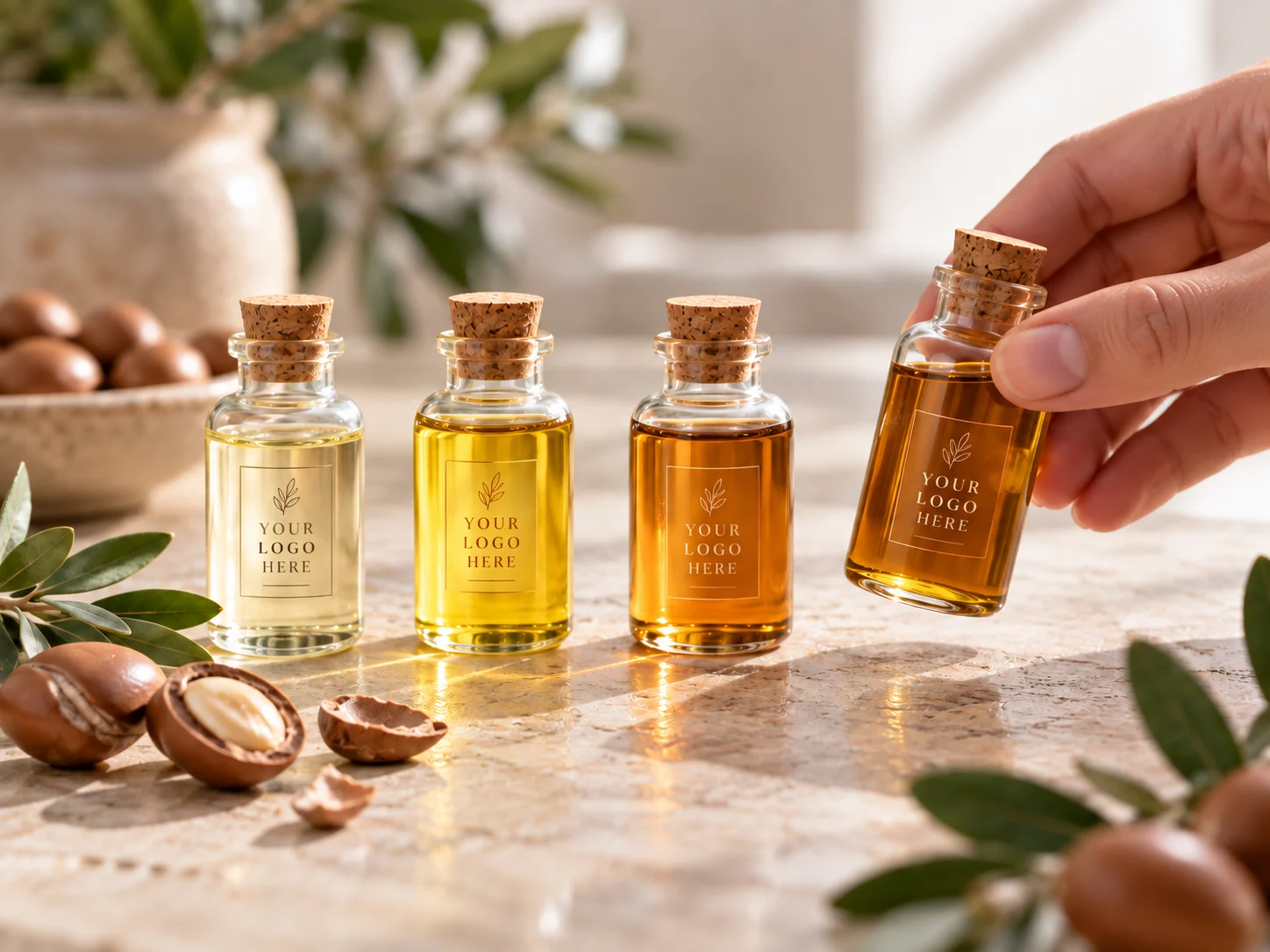
When argan oil became famous, a lot of oil that isn't quite argan oil became famous with it. Some is diluted with cheaper oils. Some is culinary oil sold as cosmetic. Some is refined until most of what makes argan special is gone. And some bottles labelled "argan" contain mostly something else.
Whether you buy a single bottle or a 200-liter drum, you can protect yourself. Some checks take ten seconds in a shop; others need a lab. This guide explains both, and which home "tests" you shouldn't trust.
Argan oil is slow and expensive to make. The argan tree grows almost only in southwestern Morocco, and it takes a large quantity of fruit - tens of kilograms - to produce one liter of oil. Cheaper oils such as sunflower or soybean cost a fraction of that price and look similar once mixed. That price gap is the whole reason adulteration exists.
This is the fastest and most reliable check you can do without a lab. Pure argan oil lists one ingredient: Argania Spinosa Kernel Oil.
Blends aren't illegal - but they shouldn't be sold or priced as pure argan oil.
Cosmetic argan oil is golden yellow. Culinary oil is darker amber. Very pale, almost clear oil deserves questions: it may be refined or diluted.
Color alone is not proof. It varies with the harvest, the pressing and filtration. Use it as a warning sign, not a verdict.
Rub a few drops between your fingers and onto the back of your hand. Pure argan oil feels silky and absorbs within a few minutes, leaving the skin soft rather than greasy. An oil that stays on the surface as a heavy film for a long time may be blended with a heavier oil.
Serious producers sell argan oil in dark glass - amber, cobalt or frosted - because light damages the oil. Clear plastic is a bad sign for a product meant to be kept for months. Also look for a batch number and an expiry date or period-after-opening symbol: missing batch numbers often mean missing quality control.
Argan oil cannot be cheap. If a 100 ml bottle of "100% pure organic argan oil" costs less than a good olive oil, something is wrong. The same rule applies in bulk: offers far below what established producers quote for the same grade are the biggest single warning sign.
For any professional purchase, ask for the Certificate of Analysis of the batch you will receive. A useful COA shows:
A supplier who sends the same PDF for every order, or no COA at all, is telling you something. Our guide on how to choose an argan oil supplier explains how to read each value.
For bulk orders, a laboratory analysis is the only reliable way to detect dilution. Two analyses matter most:
The cost of a lab panel is small compared with one contaminated drum. Test the approved sample, then test the first production batch.
You'll find many tricks online. Most are unreliable:
Use the INCI list, smell, packaging, price and documents for everyday decisions. Use a lab for professional ones.
The two are made from the same kernels, but culinary oil comes from roasted kernels and is made for food. They are different products, with different rules and prices. Culinary oil sold as cosmetic, or the reverse, is a common form of mislabeling. Ask which grade you're buying, and check the smell.
Cosmetic argan oil has a light, slightly nutty scent that fades quickly. A strong toasted smell means culinary oil; a rancid smell means the oil has oxidized.
You can check the INCI list, smell, color, texture and packaging. These catch obvious problems, but only a lab analysis of fatty acids and sterols can confirm purity.
No. Deodorized argan oil is a legitimate product preferred by some formulators. It should be labelled and sold as deodorized, not as virgin oil with its natural scent.
It can turn cloudy in the cold, but so can many other oils and blends. The fridge test does not prove purity.
Every batch of our argan oil comes with its own COA. Request Samples
Ready to source from Morocco?
Every supplier says 100% pure. Here is how to read a COA, verify certificates, test samples and spot red flags before your first bulk order.
Read the guide
Documents, Incoterms, shipping times and customs: everything you need for a first argan oil shipment from Morocco to arrive without surprises.
Read the guide
Why two argan oil quotes can differ by 30%: grade, certification, harvest, packaging and Incoterms explained, plus how to compare offers fairly.
Read the guide