
9 min read
How to Choose an Argan Oil Supplier in Morocco: What We Tell Every New Buyer
Every supplier says 100% pure. Here is how to read a COA, verify certificates, test samples and spot red flags before your first bulk order.
Read the guide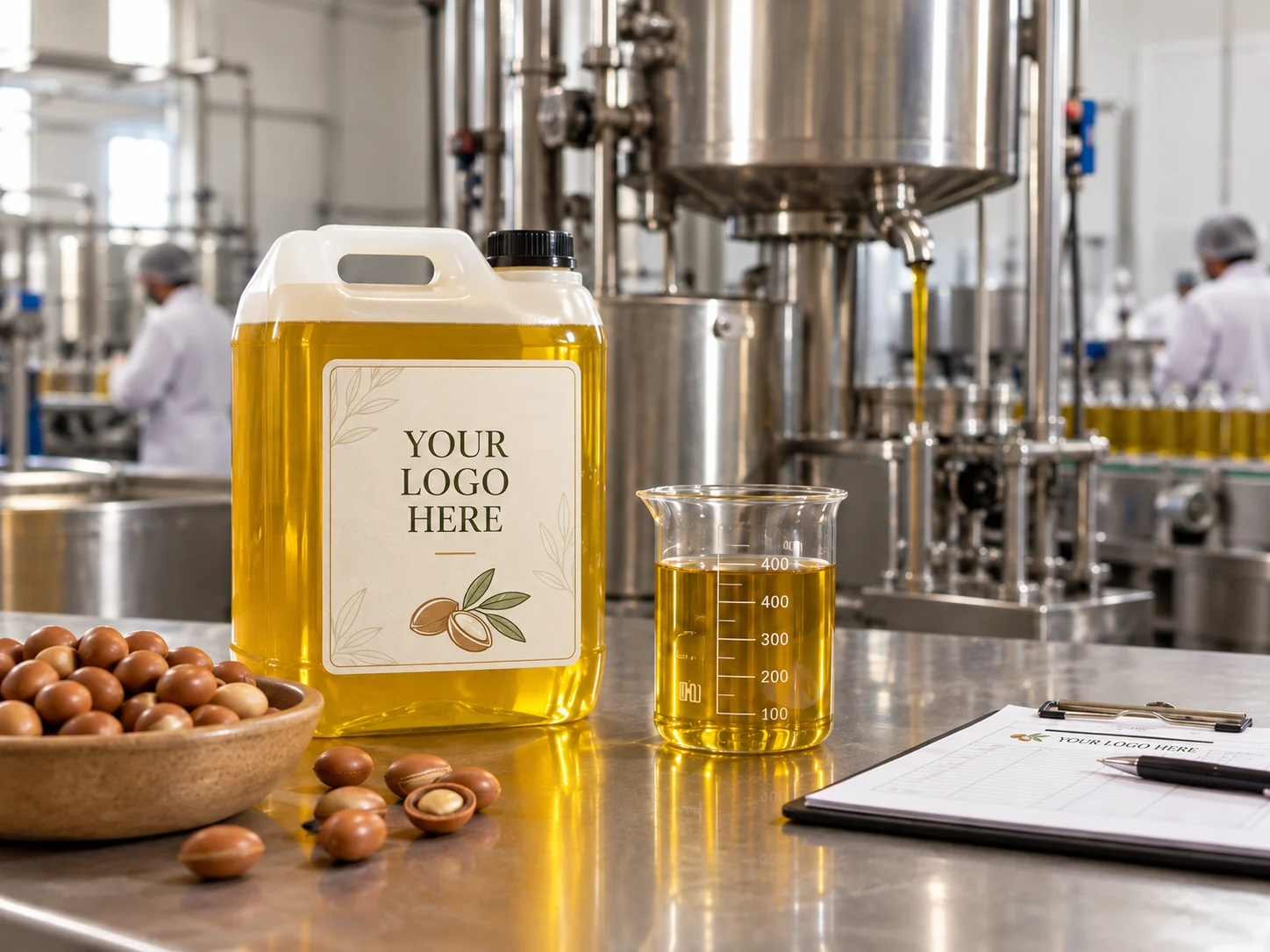
"How much does argan oil cost wholesale?" is usually the first question in a buyer's email. It's a fair question, but a single number rarely helps: two quotes for "argan oil" can be for different products, in different packaging, delivered to different places.
This guide explains what actually drives the price per liter, how to compare quotes fairly, and how to keep costs down without ending up with oil you can't sell.
Understanding the cost structure helps you judge whether a quote is realistic.
When a quote is far below what established producers ask, one of these costs is being skipped - usually quality.
Always make sure the quotes you compare are for the same grade.
Within cosmetic oil, fresher oil with lower acidity (extra-virgin) is worth more than oil that barely meets the standard. Ask for the batch COA with every quote.
Certified organic oil costs more: certification fees, audits, segregated storage, traceability paperwork. If you won't claim "organic" on your label, conventional oil with a clean COA may be the smarter buy.
Argan fruit ripens in summer, and the size of the harvest depends on rainfall. After dry years, kernel prices rise and oil prices follow. Recent drought years in Morocco have made this factor more visible. Good suppliers warn you before the season, not after you've committed.
Price per liter drops as volume grows. The biggest steps are usually:
| Packaging | Effect on price per liter |
|---|---|
| 200L drum | Lowest |
| 25L jerrycan | Low |
| 5L jerrycan | Medium |
| 1L bottle | Higher |
| Retail bottles (30-100 ml) with dropper or pump | Highest - you're paying for glass, closure, labeling and filling |
An EXW price (you collect from the facility) and a DAP price (delivered to your door) are not comparable. Shipping, insurance, duties and fees can change the landed cost significantly, especially for small orders.
Quotes in euros or dollars depend on the exchange rate with the Moroccan dirham. Longer payment terms or letters of credit may also change the price.
Put every quote in the same table before deciding:
| Check | Supplier A | Supplier B |
|---|---|---|
| Grade (cosmetic / deodorized / culinary) | ||
| Quality level and acidity on the COA | ||
| Certification and certificate number | ||
| Packaging | ||
| Quantity | ||
| Incoterm | ||
| Documents included (COA, MSDS, origin, organic) | ||
| Lead time | ||
| Payment terms | ||
| Landed cost per liter at your door |
The last line is the only price that matters. See our guide on importing argan oil from Morocco for how to calculate it.
Mainly because of the harvest. The trees depend on rainfall, so dry years reduce the supply of kernels and push prices up.
Only if you will sell your product as organic and meet the organic rules of your market. Otherwise, conventional oil with a clean COA is often the better choice.
Often yes for the oil itself, but add your local filling, bottles, labels and labor before deciding. For small volumes, ready-filled private label bottles can work out cheaper.
Because the price depends on grade, certification, packaging, quantity, destination and the current harvest. A quote based on your exact needs is more accurate than a list price.
Get today's price for your volume and destination. Request a Quote
Ready to source from Morocco?
Every supplier says 100% pure. Here is how to read a COA, verify certificates, test samples and spot red flags before your first bulk order.
Read the guide
Documents, Incoterms, shipping times and customs: everything you need for a first argan oil shipment from Morocco to arrive without surprises.
Read the guide
Diluted and mislabelled argan oil is common. Eight simple checks - from the INCI list to a sterol test - to make sure you get the real thing.
Read the guide