Moroccan Hammam Products: A Wholesale Guide for Spas and Retailers
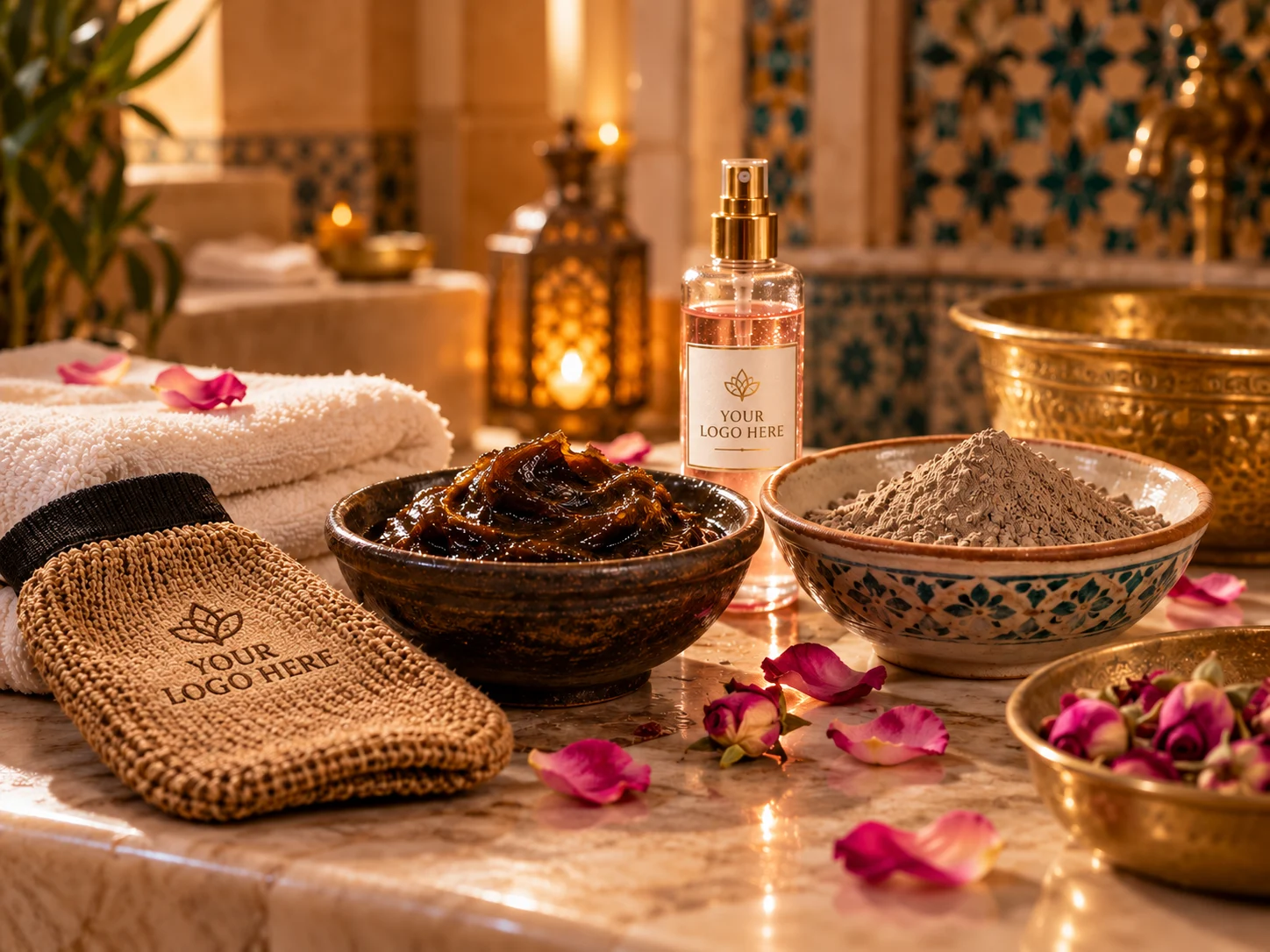
The Moroccan hammam ritual has become one of the most requested treatments in spas and wellness centers. It's easy to understand why: it feels traditional, it's deeply relaxing, and clients see and feel the result straight away.
To offer it properly - or to sell hammam kits in your store - you need a small set of authentic products and a clear protocol. This guide covers both, plus the practical details spas often learn the hard way: hygiene, storage and how much to order.
The 5 Essential Products
| Product | Role in the ritual | What to check when buying |
|---|---|---|
| Moroccan black soap (savon beldi) | Softens the skin before exfoliation | Soft, gel-like texture; made from olive paste and olive oil; ingredient list |
| Kessa glove | Removes dead skin cells | Firm but not scratchy weave; well-finished seams |
| Rhassoul (ghassoul) clay | Cleansing mask for skin and hair | Fine, clean powder; no grit or sand |
| Rose water | Tones and refreshes after the mask | Distilled floral water, with no added fragrance |
| Argan oil | Nourishes the skin at the end | Cosmetic grade, in dark packaging, with a batch COA |
Optional extras: eucalyptus or rose black soap, nila powder for masks, and a scented body oil for the final massage.
The Ritual Step by Step
- Warm up (steam or warm shower). Around 10 minutes, so the skin softens and pores open.
- Black soap. Apply a thin layer to damp skin and leave it for several minutes. Don't rinse too quickly: the soap needs time to soften the top layer of skin.
- Rinse, then kessa exfoliation. Using firm, long strokes, the therapist exfoliates the whole body. This is the moment clients remember - and the step where technique matters most.
- Rhassoul mask. Mix the clay with warm water or rose water into a smooth paste. Apply to the body (and face if suitable), leave for about 10 minutes, then rinse.
- Rose water. Mist or pat onto the skin to refresh and tone.
- Argan oil massage. Finish with a light massage while the skin is still slightly damp.
Write your own protocol with exact timings, and train every therapist on it. Consistency is what makes clients book again.
Hygiene and Practical Tips for Spas
- One kessa glove per client. Either use a new glove for each treatment and give it to the client, or sell it as part of the treatment. Reusing gloves between clients is a hygiene risk and a bad impression.
- Decant, don't dip. Take black soap and clay out of the bulk container with a clean spatula into single-use bowls. Never put hands or used tools back into the bulk jar.
- Prepare clay fresh. Mix only what you need for each client.
- Store products correctly. Keep black soap and clay containers tightly closed, away from heat and steam. Keep argan oil and rose water away from light.
- Patch-test sensitive clients. Ask about allergies before the treatment, and be gentle with the kessa on sensitive or thin skin.
- Label your decanted products with product name and batch number for traceability.
How Much to Order
Consumption depends on your therapists' technique and your clients, so the best method is to measure:
- During a trial week, weigh or measure how much of each product is used per treatment.
- Multiply by the number of treatments you expect per month.
- Add a safety margin of about 20%.
- Compare with the product shelf life and your storage space, so you don't over-order.
Professional formats (large tubs of black soap, bags of rhassoul, 1L or 5L argan oil) are much cheaper per treatment than retail sizes. Keep retail sizes for your shop shelf.
Hammam Kits for Retail
A hammam kit turns a one-off treatment into a product clients take home - and remember you by. A typical kit contains:
- black soap,
- a kessa glove,
- rhassoul clay,
- a small bottle of argan oil,
- optional: rose water and a printed ritual card with the steps.
Kits sell especially well as gifts, around holidays and in concept stores. Under private label, the box, labels and ritual card carry your spa's brand, which keeps you in the client's bathroom long after their visit.
Buying Wholesale: What to Check
- Samples first. Test the soap texture, the clay's fineness and the glove's feel before committing.
- Ingredient lists and documents. Ask for INCI lists, MSDS and a COA for the argan oil.
- Consistency. Ask how the supplier keeps texture and color consistent from batch to batch.
- Packaging. Professional tubs and bags for treatments; retail jars and bottles for resale.
- Minimums. Check minimum quantities per product and whether you can combine products in one shipment.
Mistakes Spas Often Make
- Buying retail sizes for professional use.
- Reusing kessa gloves between clients.
- Storing black soap in a hot, humid treatment room with the lid open.
- Buying argan oil in clear plastic.
- Offering the ritual without a written protocol, so every therapist does it differently.
FAQ
What is the difference between Moroccan black soap and African black soap?
Moroccan black soap (savon beldi) is a soft, gel-like soap made from olive paste and olive oil, used before exfoliation in the hammam. African black soap comes from West Africa and is made with different ingredients, such as plant ashes and shea butter.
Can the hammam ritual be done without a steam room?
Yes. A warm shower or warm towels can soften the skin before the black soap, although steam gives the best result.
How often can clients have a hammam treatment?
Many spas recommend spacing full exfoliation treatments by a couple of weeks, and being gentler on sensitive skin. Follow your own professional judgment for each client.
Can I sell hammam kits under my spa's brand?
Yes. With private label, the kit is packed with your brand on the box and labels.
Order a sample hammam kit for your spa. Request Samples
Ready to source from Morocco?